A common feature in schools, restaurants, grocery stores, warehouses, cold storage, and healthcare facilities, they improve durability while also dividing work areas in order to manage airflow, reduce noise, and keep traffic moving efficientl
Traffic Impact Doors
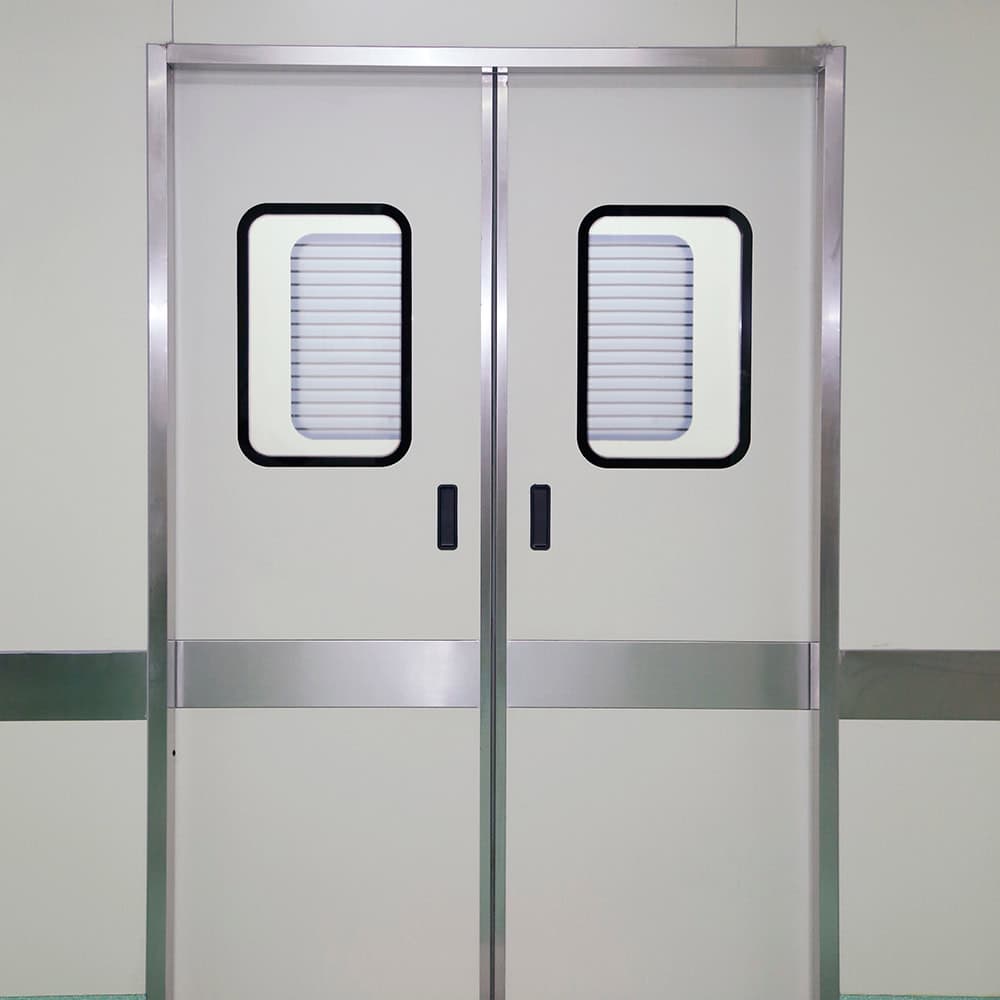
Commercial impact doors are engineered to endure repeated bumps, jolts, and collisions with minimal damage — making them ideal for fast-paced environments with foot traffic, rolling carts, and forklifts.
Built for High-Traffic and High-Stress Environments
Capable of withstanding repeated physical impact from carts, vehicles, and other equipment, impact doors are designed for use in demanding commercial settings. Available in flexible and rigid styles to suit your operational needs, they reduce damage, downtime, and maintenance costs.
Applications for Traffic Impact Doors
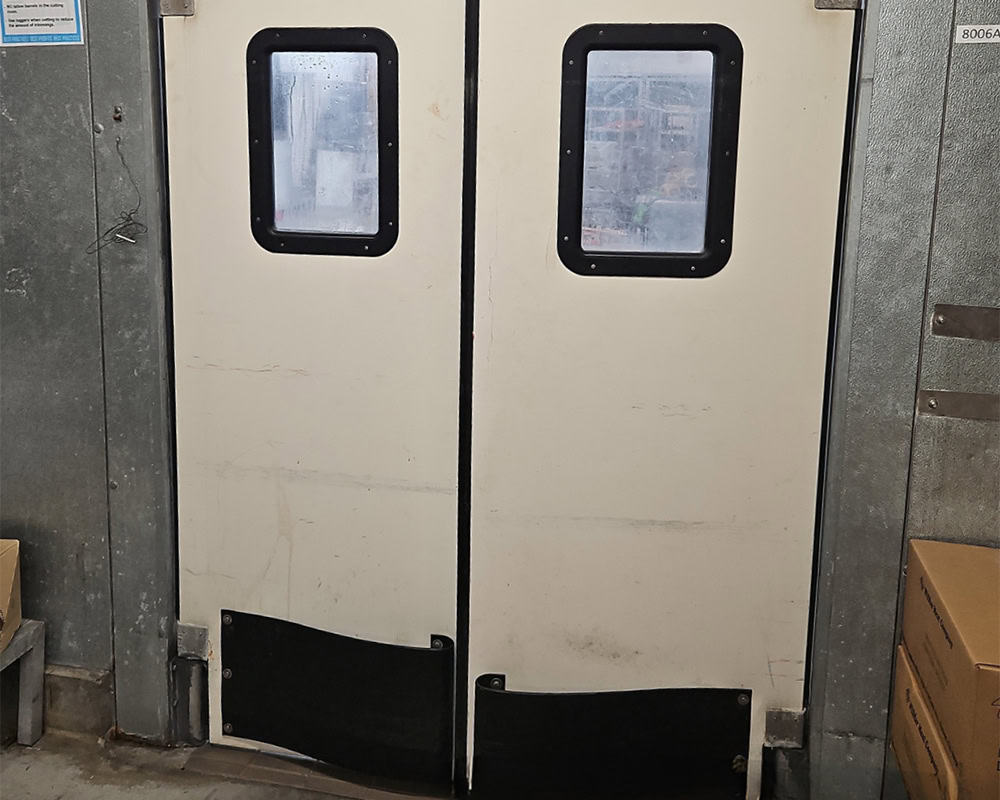
Thanks to their heavy duty construction, traffic impact doors are a standard component in busy locations looking for ways to reduce maintenance costs and improve efficiency, including:
- Warehouses & Logistics Centers
- Cold Storage & Food Processing Facilities
- Schools & Universities
- Healthcare Facilities
- Retail Stockrooms & Grocery Stores
- Transportation Terminals
- Government Buildings
- Restaurants & Hospitality
Key Features of Traffic Impact Doors
Commercial impact doors deliver strength, savings, and performance. Here are the features that set them apart and make them a valuable addition to your property.
Reinforced Construction
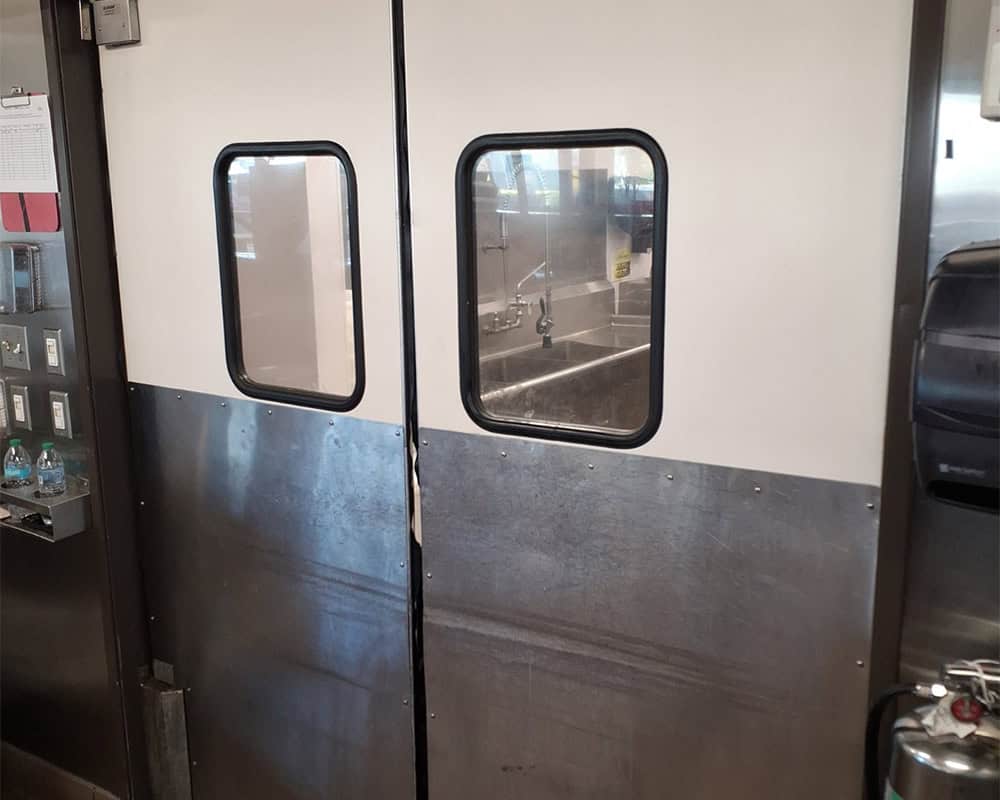
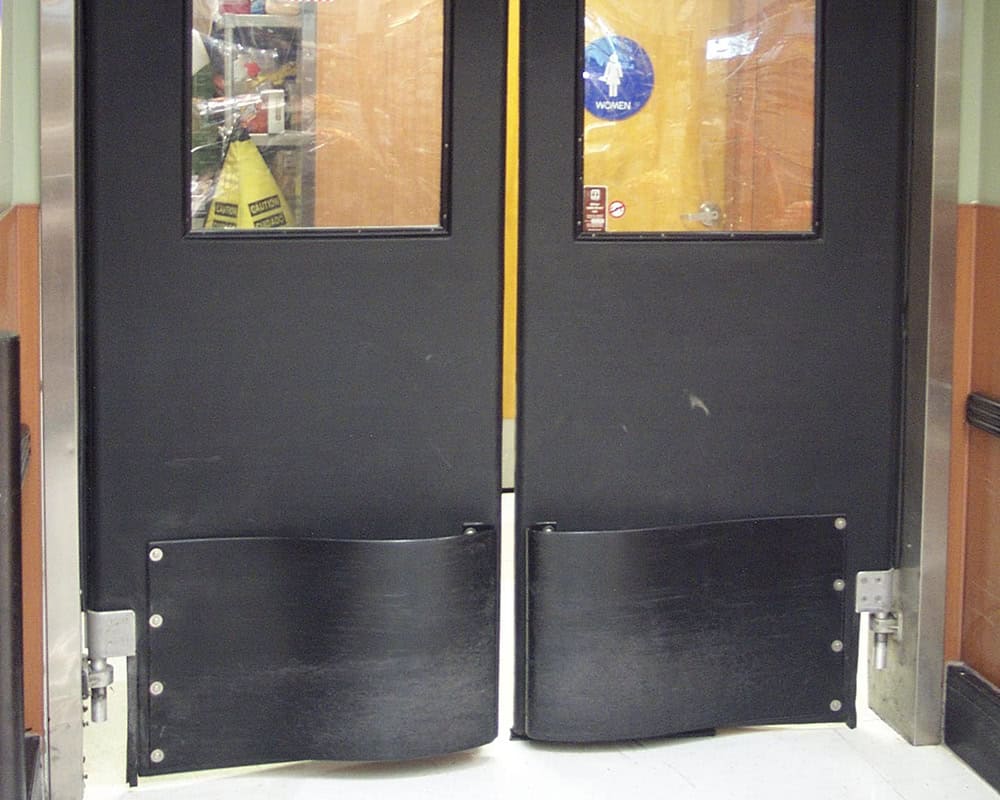
Traffic impact doors are designed to absorb and disperse force. Their fortified structure includes:
- High-strength cores that resist dents and deformation
- Reinforced panels for extra durability in high-traffic zones
- Optional bumpers or kickplates that protect door surfaces from carts and equipment
Separates Spaces Without Slowing Down Traffic
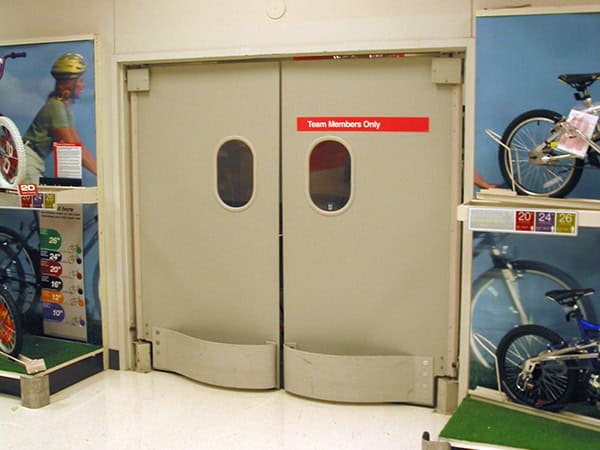
Reinforced doors create physical barriers that help control noise, temperature, and cross-contamination, while allowing hands-free access. Their durable, swing or automatic operation:
- Helps contain noise between loud and quiet areas
- Reduces transfer of airborne contaminants in food-safe or sanitized environments
- Maintains air temperature in climate-controlled zones
Fast-Response Repair Services
Backed by the latest tools and training, Vortex rapid deployment services keeps your operations running smoothly. Our technicians are available twenty-four hours a day, seven days a week, ready to react in case your doors are jamming, swinging unevenly, or causing workflow disruptions.
Why Choose Vortex for Traffic Impact Door Repair & Installation?
Vortex doors has delivered fast, reliable, and exceptional service for over 89 years. Our experience extends the lifespan of your doors, preventing small issues from causing major, irreparable damage. Thanks to our nationwide service coverage, we react quickly to emergency breakdowns, often restoring broken equipment in a single visit. Every technician on our team is certified, bringing expertise, accountability, and professionalism to every job. Contact us today for help repairing, refurbishing, and upgrading your doors and components.
Frequently Asked Questions
What are commercial impact doors?
Traffic impact doors are heavy-duty doors built to withstand frequent use, physical impact, and environmental stress in commercial and industrial settings. Unlike standard doors, they’re constructed from reinforced materials such as stainless steel, fiberglass, or high-density polyethylene. Many include internal cores or laminated glass for added strength.
What industries benefit most from commercial impact doors?
Any industry where safety, hygiene, durability, and traffic flow are critical will benefit from commercial impact doors.
Are commercial impact doors compliant with ADA and fire safety codes?
While most traffic impact doors are ADA compliant, not every one is. Whether they comply with government regulations depends on how they’re designed, installed, and configured.
What maintenance is required for commercial impact doors?
Even though impact doors are built to last, without preventative care, they eventually run into problems. Critical maintenance tasks include:
- Checking panels for cracks, dents, and scratches
- Removing dirt and grime
- Lubricating hinges
- Examining the frame for signs of damage
- Testing for alignment issues
- Tightening loose hardware
- Inspecting windows for cracks and clouding
Fully Certified & Accredited Commercial Door Experts