What is a Storeroom Lock?
April 2, 2025 | Commercial Doors
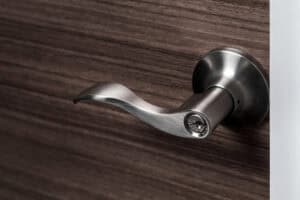
One of the five basic lockset functions (entry, storeroom, classroom, privacy, and passage), storeroom locks protect assets, inventory, and high-security areas. Commonly found in schools, workshops, factories, hospitals, offices, warehouses, and shopping centers – storeroom locks have a wide range of commercial applications. We provide a full explanation of “what is a storeroom lock,” including basic features and benefits, to help you choose the right solution for your storage needs.
How Storeroom Locks Work
A storeroom lock is designed to prevent unauthorized entry while granting easy access to your staff. Though there are several variations, they include three central features:
- Locked From the Outside. With a storeroom lock, the outside lever is always secure. Once the door is closed, you cannot retract the latch by simply turning the handle.
- Free Egress From the Inside. A thumbturn on the inside lever allows you to exit the storage room at any time. There is no keyway or push button that will enable you to secure it from the inside. It’s a safety feature that provides a clear escape route during an emergency.
- No Entry Without a Key. Unlike other door locks, storeroom locks can only be opened with a key or the right credentials. It cannot be left open either. Once the door is shut, the latch re-engages and has to be unlocked before you can go back inside.
Storeroom locks generally come in two varieties: cylindrical locks and mortise locks. Each is made from stainless steel, but provides a different level of security, based on their unique layouts and construction.
Cylindrical Locks vs. Mortise Locks
Cylindrical locks are one of the most popular types of door hardware, known for their simplicity, durability, and reliability. A cylindrical lock consists of:
- Cylinder. Contains a pin and tumbler system. When you insert the key, the pins align, allowing the lock to turn and open.
- Latchbolt. The mechanical fastener that extends into the jamb and secures the door.
- Locking Mechanism. Most cylindrical locks have dual cylinders, meaning the door levers can be unlocked from either side, but all storeroom doors have one cylinder.
Installing a cylindrical lock is relatively straightforward. You simply bore a hole through the door and insert the cylinder. Then make a hole in the doorframe for the latch. Mortise locks, on the other hand, are installed inside a recess (mortise) cut into the door itself. They consist of:
- Lock Body. The main component of the lock, containing the pins and tumblers; larger and heavier than a cylindrical lock.
- Strike Plate. A metal plate attached to the door frame or jamb, which catches the bolt when you close the door.
- Locking Mechanism. Contains the pins and tumblers.
- Latch and Deadbolt. Though deadlocking is an optional feature, combining it with the latch provides an additional layer of security.
Cylindrical locks have a simple, lightweight locking mechanism, which makes them vulnerable to physical attacks. And because the lock is mounted to the surface of the door, it’s easier to remove or tamper with. However, they’re inexpensive and easy to install – a popular choice for schools, hotels, offices, and other low-security environments.
Mortise locks, by contrast, have a larger number of components, which makes them difficult to manipulate, even for a trained locksmith. They’re sturdier as well. Their extra weight makes them harder to force and because they’re part of the door structure, they’re more resistant to impact.
Fail Safe vs. Fail Secure
Rather than rely on keys, which can be lost, stolen, or duplicated, many businesses prefer to integrate storeroom locks into their existing access control systems. Keypads, keycards, and RFID scanners provide precise control over restricted areas. Most electronic locks are designed to fail safe, meaning they open automatically during a power outage.
However, storeroom levers fail secure. When power is lost, they remain locked – making them a perfect choice for server rooms, pharmaceutical labs, financial offices, government buildings, and other locations where security is a higher priority than access.
Maintenance and Repair
Like all commercial door hardware, storeroom locks cannot function properly without regular inspections and service. Vortex technicians are trained to detect signs of wear and replace worn parts before they compromise the door’s function or security. Setting up a service plan ensures storeroom doors are safe and accessible at all times. Keep your doors working smoothly. Contact us today to schedule your inspection.
Want to SHARE this?
Categories
Popular Links
Related Content
Fully Certified and Accredited Commercial Door Experts