In this guide, we’ll cover everything you need to know about automatic doors ‒ types, technology, operation, and safety features ‒ as well as the locations that can benefit from them most, to help you make the best decision for your business, building, and customers.
The Complete Guide to Automatic Doors for Commercial Buildings
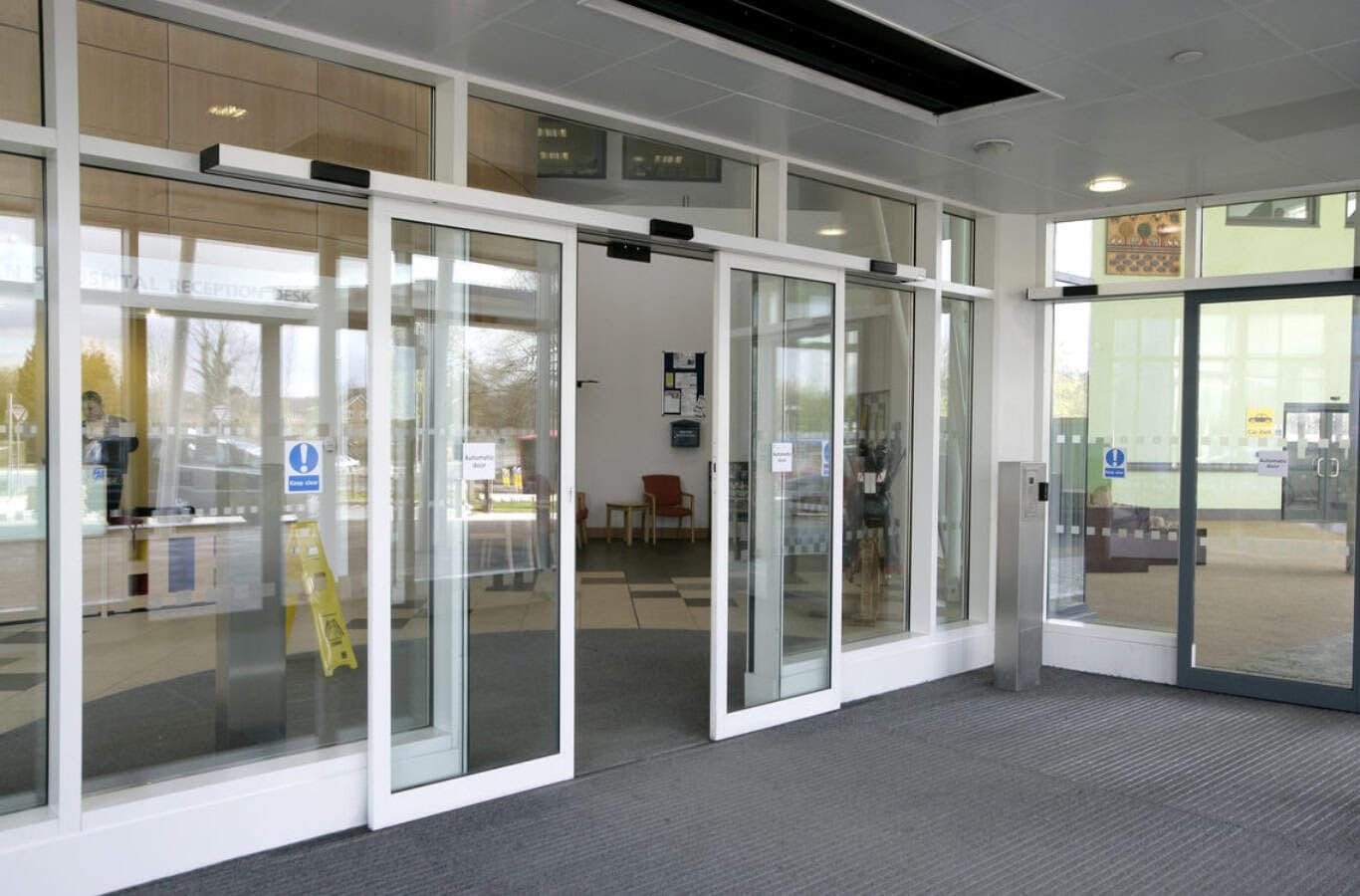
Convenient, accessible, and efficient, automatic doors are a staple of modern commercial and industrial buildings. From sliding glass panels to power-assisted doors, choosing the right automatic door requires an understanding of safety regulations, traffic patterns, and long term maintenance requirements.
Why Automatic Doors Matter for Today's Businesses
Installing automatic doors improves access to your building, allowing everyone ‒ staff, visitors, and customers ‒ to enter your workspace with minimal effort, regardless of their physical ability. They're an important feature for any company, facility, or institution that interacts with the public. Besides making spaces welcoming and professional, they also help you accommodate the diverse needs of society ‒ an important aspect of the Americans with Disabilities Act (ADA).
Signed into law in July 1990, the ADA requires all businesses and public establishments to provide equal access to disabled individuals. While it doesn’t mandate the use of automatic doors, automatic doors are one of the most common and effective ways for property owners to fulfill their legal obligations, avoid potential fines, and remove barriers for those with limited mobility.
What Are Automatic Doors?
Automatic doors are entry systems that open without the need for manual effort. Fully automatic doors are controlled by a motor connected to a sensor that detects and responds to motion. As users approach, the sensor activates the motor and opens the doors. Older models sometimes use pressure sensors rather than motion detectors, normally encased in a mat on either side of the door, though most of these have been phased out.
Basic Components of Automatic Doors
According to ancient sources, the first automatic doors were constructed by the Romans over 2,000 years ago. Though no remains have ever been found, they were said to be controlled by a series of pipes and pulleys connected to a boiler. When a fire was lit above the boiler, the heat converted its water into steam, which was funneled out into an adjoining tank that was suspended above the floor. As the tank filled up, its weight forced the doors open. After the fire was extinguished, the steam condensed and flowed back into the boiler, closing the doors again.
After the Roman Empire collapsed, automatic doors emerged again until the 1930s, but spread rapidly thanks to modern technology. By the 1980s, they were a fixture in transit hubs, shopping centers, and medical facilities. While their basic operation remains the same, today’s automatic doors are far more sophisticated than their early predecessors ‒ even though the number of parts responsible for their basic functions is surprisingly small.
- Sensors: The first automatic doors relied on floor sensors, which responded to pressure then users walked up and stood on them. Motion sensors weren’t introduced until the 1970s, but quickly became the standard. Early versions detected motion using microwave sensors. Today’s doors use both microwave and infrared sensors instead, because they’re less likely to be triggered by non-human objects.
- Control Unit: The heart of the door system, the control unit contains a circuit board and microprocessor that act as the door’s “brain.” They interpret the signals transmitted by the sensors based on their programming, which tells them whether to open or close the door.
- Drive Unit: Sliding automatic doors are powered by an electric motor above the door. The motor turns a set of gears attached to a belt or chain, which are connected to the door panels. When the unit is activated, the gears translate the motor’s rotational motion into linear motion, opening or closing the door.
- Tracks, Rollers, and Hinges: Sliding doors rely on tracks and rollers to facilitate movement. Tracks are installed at the top and bottom of the frame, while the rollers are positioned along the top edges of the door panels, allowing the door to glide along the tracks.
Safety Devices
In order to prevent the door from accidentally closing on objects or users, all automatic doors include a number of mechanisms that can bypass normal operations, preventing injuries and permitting access during a power outage.
- Safety Sensors: Detects objects in the door’s path when closing.
- Emergency Stops: Immediately halt the door.
- Manual Override: Allows users to pull the door open in case of an electrical failure.
- Tempered Glass: Shatters into small cubes rather than shards, reducing the risk of lacerations in the unlikely event the glass breaks.
Types of Automatic Doors for Commercial Use
Automatic doors are available in a wide range of sizes and configurations, allowing them to operate in practically any commercial or industrial setting, even in locations with limited space. These include:
- Automatic Sliding Doors: The most popular type of automatic doors. They consist of one or more glass panels that move horizontally along a track.
- Automatic Telescoping Doors: A space-saving option, these doors are made from a series of small panels that slide back and stack on top of each other as they open.
- Automatic Bifolding Doors: Another unit designed for limited space, the panels on these doors pivot as they open, folding and stacking on top of each other.
- Automatic Swing Doors: Single or dual-panel doors that open and close with the same motion as traditional hinged doors.
Where Are Automatic Doors Used?
Automatic doors are found in nearly every major industry across the world. By facilitating movement, they help manage foot traffic in both public and private settings, such as:
- Retail Stores: Automatic doors streamline movement during peak hours and high-volume sales events.
- Office Buildings: Installing automatic doors helps foster an inclusive environment, where all employees have equal access to their workplace.
- Grocery Stores: Because shoppers need to handle carts, bags, and sometimes children as well, hands-free entry systems make it easier for them to enter and exit smoothly.
- Airports and Transportation Hubs: Automated doors let transit facilities accommodate thousands of travelers and keep people moving smoothly during rush hours, boarding times, and major holidays.
- Hospitality Venues: Hands-free entry systems help hotels and resorts centers accommodate guests carrying bags and suitcases without creating chokepoints around their main entrances.
- Warehouses and Industrial Sites: By allowing business to redeploy goods, resources, and workers between loading docks and workspaces, automatic doors improve operational efficiency in factories, storerooms, lunch rooms, and manufacturing centers.
- Hospitals and Clinics: Installing automatic doors reduces the number of touchpoints required to navigate the building, automatic doors allow healthcare centers to maintain a sterile environment while expediting movement in corridors, entrances, and between departments.
Benefits of Installing Automatic Doors
An essential element of both large and small businesses, automatic doors enhance the function and value of your property. Whether you own a factory, retail shop, or supermarket, they offer a broad array of practical and aesthetic benefits that improve the way people interact with your space.
Seamless Access
At busy locations, even the small delay caused by pushing or pulling a door open can lead to congestion. Automated doors allow foot traffic to proceed uninterrupted, creating a continuous flow of people moving in and out of your building.
Improved Hygiene
Germs spread when people come into contact with contaminated surfaces, such as door handles. Self-opening doors reduce points of contact, thereby limiting exposure to harmful microbes.
Energy Efficiency
Because they only open when needed, automatic doors minimize exposure to the elements. By preventing heat from escaping during winter and cool air from getting out during summer, they help maintain comfortable indoor temperatures while lessening the strain on your climate system.
Brand Perception
Removing barriers to entry makes it easier for all types of people to engage with your business. The simpler it is to access your goods and services, the happier customers will be and the more likely they are to return.
Curb Appeal
Constructed from polished steel and aluminum, today’s automatic doors provide a sleek, minimalist aesthetic that blends well with nearly any style. Their large glass panels also let you take advantage of natural light, creating a bright, inviting atmosphere that draws interest and encourages people to come inside.
Property Value
Replacing manual doors with automatic doors makes your building more attractive to tenants, buyers, and customers. Because automated doors are considered a standard feature in most commercial buildings, upgrading your doors often lets you charge more for rent or sell for a higher price.
When to Consider Switching to Automatic Doors
Any business dealing with congestion ought to consider upgrading their doors. Manual doors take more time to operate, especially for people with disabilities. Instead of entering and exiting smoothly, people are forced to wait their turn, which can easily lead to gridlock during peak hours. Anyone with their arms full will likely find it difficult to operate the door at all and, in many cases, will force it open with their foot or shoulder rather than trying to use the handle, which is both inconvenient and potentially damaging.
In addition to incidents like these, complaints from handicapped individuals are one of the clearest signs your existing doors are no longer adequate. Accessibility is both a practical and legal issue. The Department of Justice is responsible for enforcing ADA compliance. State and local agencies may also step in if they’re notified of a potential violation. If you see someone with a mobility aid struggling to get through your door, it indicates that you may need to upgrade your business in order to satisfy your responsibilities under the Americans with Disabilities Act.
Lifecycle of Automatic Doors
Automatic doors are manufactured according to strict design specifications for safety and performance. Unlike residential doors, which are generally purchased ready made, automatic doors are custom sized ‒ allowing them to fit almost any opening. During the design phase, the doors are carefully measured to ensure they meet minimum requirements for clearance width and height.
Once the components have been fabricated and fully tested, they’re transported to the installation site for assembly. After preparing the door frame to ensure it’s structurally sound and capable of supporting the weight of the door, the technicians will mount the tracks and door panels. Then they’ll wire the sensors to the control unit and connect it to the power supply before running their final checks and performing an AAADM inspection, to make sure the door performs as intended.
Automatic doors usually last 10-15 years, but regular maintenance can extend their lifespan. Schedule an inspection at least once a year, to identify and replace worn components before they cause a breakdown. For your safety, any technician who works on your doors must be certified by the American Association of Automatic Door Manufacturers (AAADM). Automatic doors are sophisticated devices and even a minor miscalibration can cause them to close at the wrong time, possibly injuring someone.
Like all mechanical systems, automatic doors gradually deteriorate. Dents, scratches, and cracked glass are the most obvious signs your doors are nearing the end of their lifecycle. Erratic behavior, such as opening and closing too quickly or too slowly, is another critical indicator. Older doors may also stick or fail to respond as people approach. Frequent repairs gradually raise operating expenses, to the point that it becomes more cost-effective to simply replace the unit rather than pay to fix it.
Return on Investment
While automatic doors typically cost more than manual doors, their long-term benefits normally outweigh the initial investment. In high-traffic areas and climate-controlled environments, automated doors often pay for themselves within 2-5 years thanks to:
- Substantial Reductions in Heating and Cooling Costs: By closing quickly, automatic doors minimize energy loss in busy locations.
- Greater In-Store Traffic: Easy access encourages people to shop at your store, leading to better sales and customer retention.
- Lower Repair and Service Costs: Because they open and close gently, automatic doors suffer less wear, require fewer repairs, and generally last longer than standard doors.
- More Efficient Workflow: Employees spend less time opening and monitoring doors, allowing them to focus on core tasks. By shaving minutes off routine movements, automatic doors also allow staff to complete tasks faster.
Automatic Door Maintenance & Safety Tips
Without basic service, mechanical wear and environmental factors can significantly shorten the lifespan of your doors. Schedule an inspection with an AAADM-certified technician every 6-12 months in order to ensure your doors continue to operate safely and reliably. Key tasks include:
- Cleaning. Dirt, debris, and grime can obstruct movement and interfere with sensors.
- Lubrication. Friction wears down rollers, hinges, tracks, and gears.
- Calibration. Misaligned sensors won’t respond to movement or obstructions.
- Tightening Loose Hardware. Nuts, bolts, and screws that aren’t secure can lead to sagging door panels, skewed tracks, and instability.
- Weatherstripping Checks. Frayed or tattered weatherstripping prevents your doors from forming a watertight seal to block the elements.
- Performance Tests. Ensures doors open and close as intended, and that the emergency stop and manual override features are working properly.
Property owners should contact a technician as soon as they notice any unusual behavior. If the door isn’t moving properly, don’t push or pull on it. Any attempt to stop or force the door will put stress on the drive unit. In case of emergency, make sure you and your staff know how to activate the emergency stop and manual override.
To prevent accidents, keep the area around your door free of possible obstructions and make sure moisture doesn’t come into contact with the door’s control panel or electrical components. According to the International Building Code, all automatic doors are required to have signs explaining their operation and function. These signs must be visible on both sides of the door and replaced whenever a new panel is installed. Failure to comply could result in legal penalties.
Implementing these precautions enables your doors to operate as designed, with no delays, errors, or difficulties. Contact your local Vortex Service Branch to request service!
Are Automatic Doors Right For Your Business?
Any business that deals with a high volume of people and serves a diverse customer base will likely benefit from automatic doors. For some locations, like hospitals and warehouses, installing automatic doors enables staff to move effortlessly from one department to another, cutting down on the time needed to complete tasks and transfer materials.
Their hands-free operation makes automatic doors an important addition for any setting concerned about the spread of germs and bacteria. Most importantly, they’re one of the simplest ways to ensure your building meets ADA guidelines and remains accessible to everyone who interacts with your business.
Contact Vortex today for a custom consultation. Our technicians are certified by the AAADM. They not only understand automatic doors’ function, hardware, and safety, but can help you decide which type of door is best suited to your needs and whether an upgrade might lead to greater savings and better outcomes. Have a question? We’re ready to help.
Frequently Asked Questions
Are automatic doors required for ADA compliance?
No, automatic doors are not required for ADA compliance, but they fulfill many of the requirements. If you decide to install automatic doors, they must meet ADA requirements for clearance, opening force, and maneuvering space.
Can I retrofit my existing doorways with automatic doors?
Yes, existing entryways can be easily retrofitted with automatic doors. The exact type depends on the available space and the type of traffic it needs to accommodate.
How long do automatic doors last?
Automatic doors generally last 10-15 years. However, with proper maintenance, they can operate for over two decades with little to no issues.
How much do automatic doors cost to repair and install?
Costs vary significantly based on the scope of repairs, as well as the size and type of door being installed. Reach out to our representatives for more information on pricing.
Commercial Door Service and Repair
No matter how well designed, commercial doors cannot function without fast, reliable support. Our technicians are certified and accredited door experts. Backed by the latest tools and training, they ensure your building remains safe, accessible, and up to code. From routine upkeep to emergency repairs, we keep your business operating smoothly ‒ replacing, restoring, and upgrading faulty systems in order to avoid expensive downtime and keep your business moving forward.
Contact us today for more information about our preventative and proactive maintenance services.
Fully Certified & Accredited Commercial Door Experts